

There has been no shortage of efforts for creating digital versions of dead people. I have covered the robotic creation of Bina48 which was an animatronic head with memories of a person you could talk to, an app called Replica to have conversations with a loved one based on their text message history and more recently a project for having conversations with dead Holocaust survivors.
With the advancements in AI these have matured quite a bit with several services that are creating digital avatars that can have a perfect visual likeness and clone the voice of dead people based on image, video and audio recordings. The avatars can also have personal digital data artifacts used to store historical information about a person. Put this all together and you can have conversations with a talking video avatar with uncanny accuracy to any dead person. I list several of these services in the apps section of this site.
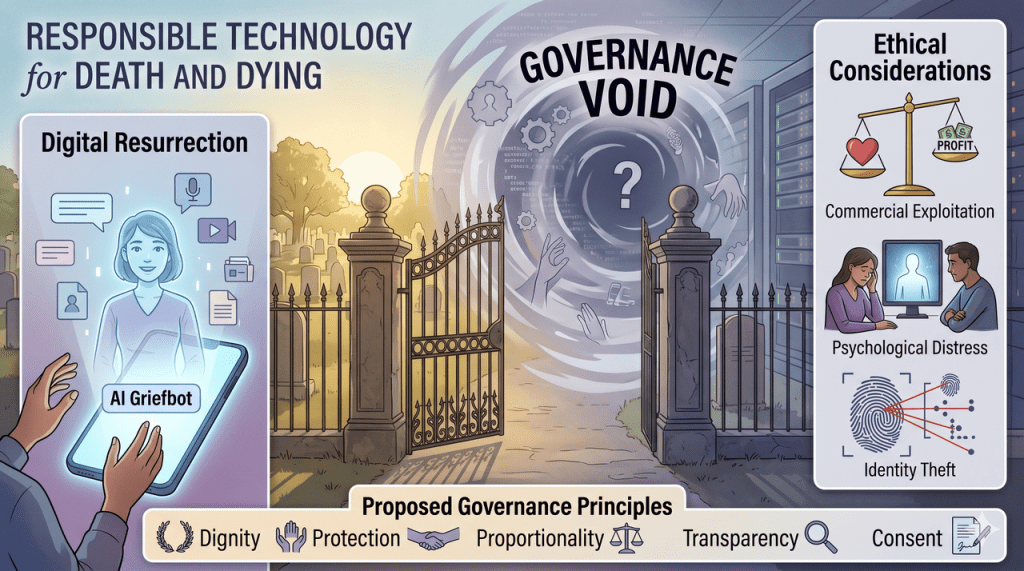
I recently came across an issue from the Journal of Responsible Technology with several research articles on death and dying. One research article, titled “Multi-stakeholder perspectives on governing innovation in the digital afterlife,” explored the emerging “governance void” surrounding digital re-creations of the deceased (such as AI “griefbots” or posthumous avatars).
The study is based on 69 stakeholder interviews across technology, governance, and thanatology (the study of death).
Key Findings
- Need for Governance: There was a nearly universal consensus among stakeholders that some form of governance is necessary to address the ethical and social risks of “digital resurrection.”
- Lack of Consensus: While everyone agreed on the need for rules, there was little agreement on what those rules should look like or who should enforce them (e.g., hard law vs. industry self-regulation).
- Potential Harms: The study identified several risks, including:
- Misuse/Fraud: Identity theft or using avatars for scams.
- Psychological Distress: Prolonging grief or creating “toxic” parasocial relationships with the dead.
- Dignity and Consent: Creating re-creations without the deceased’s prior permission or misrepresenting their views.
- Commercial Exploitation: Digital remains being treated as marketable assets by “Big Tech.”
Proposed Governance Principles
The authors suggest several principles to guide future policy:
- Dignity: Respecting the posthumous status of the deceased.
- Protection of the Vulnerable: Safeguarding those who are grieving, particularly minors.
- Proportionality: Tailoring rules based on the purpose of the AI (e.g., a museum exhibit vs. a private griefbot).
- Transparency and Disclosure: Ensuring users always know they are interacting with an AI re-creation.
- Informed Consent: Requiring clear permission from individuals while they are still alive.
Conclusion and Next Steps
Because this industry is in its infancy, the authors recommend “anticipatory governance.” Immediate steps include:
- Raising public awareness and “death literacy.”
- Establishing international policy working groups.
- Developing common terminology to define what the digital afterlife actually encompasses.
