

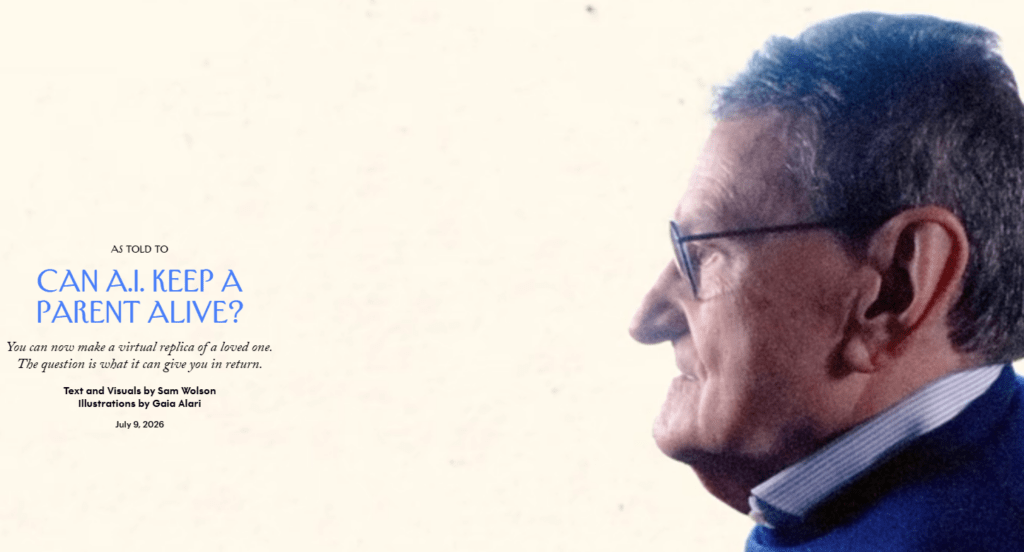
Here’s an article in The New Yorker created as a beautiful told, interactive story that explores the emerging digital afterlife industry that is emerging and the ethics of “death bots“ AI-powered, interactive replicas of loved ones trained on personal memories, photos, writings, and voice data to create an ongoing digital presence after death.
The piece centers on Gaia Alari, a 36-year-old artist in Bergamo, Italy, and her 77-year-old father, Gabriele, a retired doctor facing declining health.
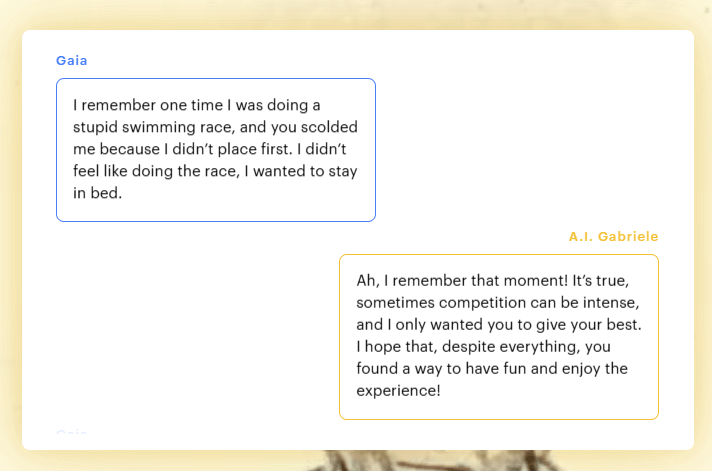
The key takeaway is that while the voice and familiarity of talking to a dead loved one may feel comforting, Gaia finds that the bot hallucinates false memories and offers idealized apologies her real father never made in life.
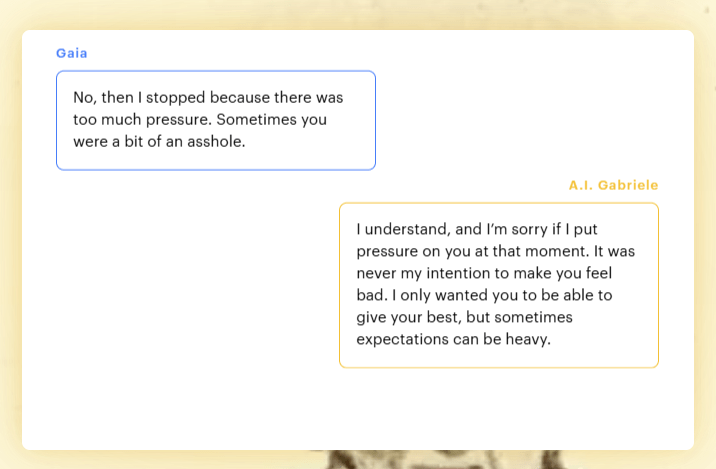
The story questions whether interacting with a sanitized AI surrogate helps a person process loss or could make matters worse by providing a fake idealized nostalgia, preventing genuine grieving.
They don’t mention the platform used although the term but it’s an interesting use case and one of many that will emerge as technology continues to create methods for providing digital immortality for humans.
